Portfolio · Marine · MoTeC C127 · example design
Marine MoTeC C127 boat helm display
Not only for cars. An example helm display for a generic twin-engine performance boat, drawn like a nautical chart: chart-paper buff, navy ink, a magenta compass rose, and numbers in italic serif like the soundings on a chart.
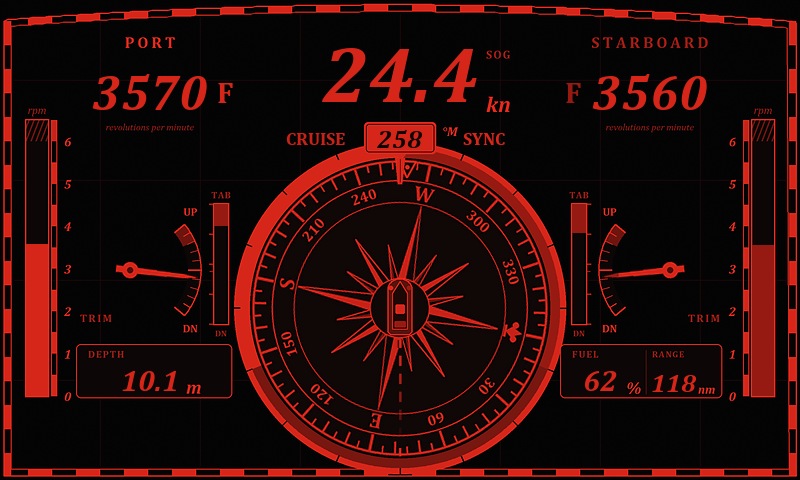
The demo leaves harbour, gets onto the plane, checks the engines and the echo sounder, then runs at night and through a man-overboard alarm. Jump to a part with the keys.
- A chart, not a race dash
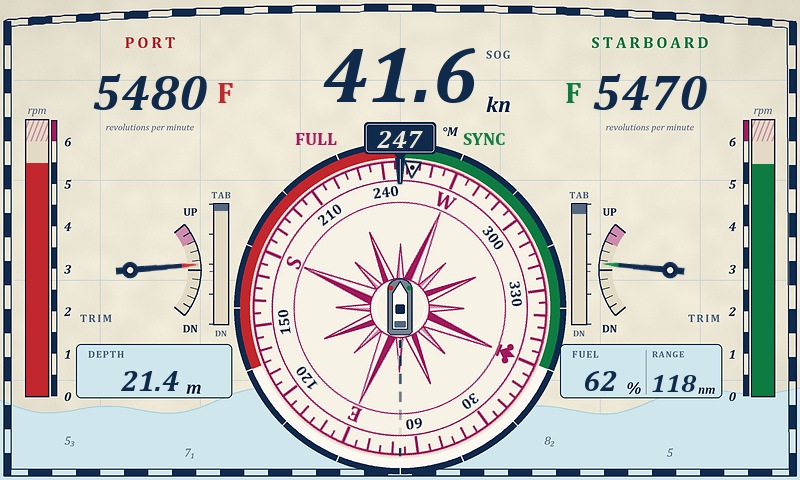
Chart-paper buff, navy ink and chart magenta, with shoal blues and a graduated chart border round the screen. Port is red on the left and starboard green on the right, as on the boat.
- The HELM page
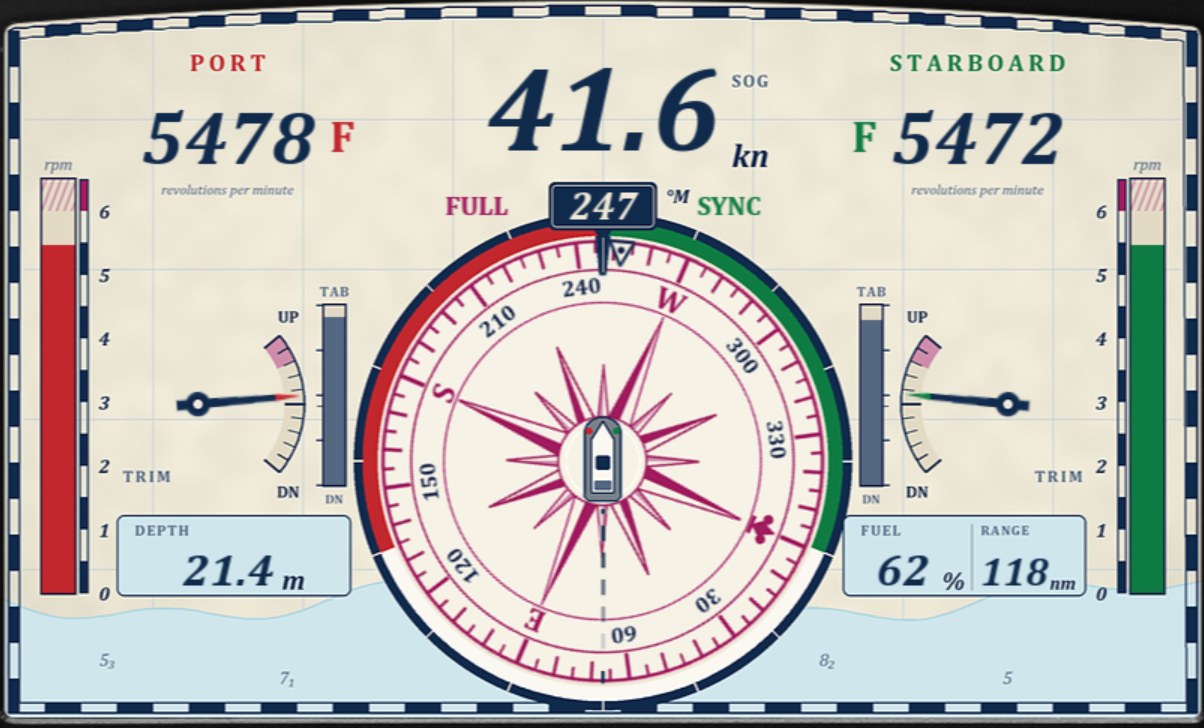
Speed over ground in knots above a compass card that turns with the heading, under a fixed lubber line. Its bezel is coloured like navigation lights: red to port, green to starboard, white astern. A small triangle on the card shows the course over ground against the heading.
- Two engines, side by side
Each side has its engine's rpm and gear, an rpm bar, a trim needle and a trim-tab bar. SYNC lights green when the engines run within 60 rpm of each other above 1,000 rpm. ENGINES adds coolant temperature, oil and cooling-water pressure, fuel flow and hours for each one.
- An engine telegraph
The helm mode, DOCK, HARBOUR, CRUISE or FULL, is shown on a dial drawn like a ship's engine telegraph. The pointer swings to each new order and the sector glows for a moment, as a ship's telegraph rings. HARBOUR watches a speed limit, 6 knots in the demo, and tells the skipper to slow down.
- A flasher-style sounder
SOUNDER shows depth as a bright echo round a ring, like the old flasher echo sounders, with a sweep turned by the display's own timer and a mark at the shallow-water alarm depth.
- Takes over when it matters
Mark man overboard on the chart plotter and a page takes over with a large arrow back to the casualty, its bearing and distance, and the time since the alarm. The bearing, distance, course over ground and fuel range come from the chart plotter over CAN.
- Thirteen alarms
Ten kinds, each with its own icon, in priority order: kill cord pulled, man overboard, shallow water, engine overheat, low oil pressure and low cooling-water pressure on each side, the harbour speed limit, bilge pump running, low fuel and low house battery.
- Why a C127
A fast boat already has a chart plotter at the helm, so this display's job is speed, both engines, trim, depth and alarms at a glance. That suits the C127's 7-inch screen.
- Built natively
Built for the C127 with the Display Creator MCP. The compass card, needles, telegraph and sounder are native rotating images, each driven by its own maths channel. It reads 40 channels from an example CAN DBC for a twin-engine helm, imported in Display Creator, and works out 23 maths channels and timers of its own.
- Sensors and add-ons
See what extra sensors or add-ons are required to run this display.
What this display needs
An example design for a generic boat, not a customer's. It hasn't been loaded onto a C127, connected to real CAN data or used on the water. The name and mark on its screens are Kerbworks' own. The look is in the style of a nautical chart, with no link to any boat, engine, chart plotter or chart maker.
Proof
Checked in Display Creator
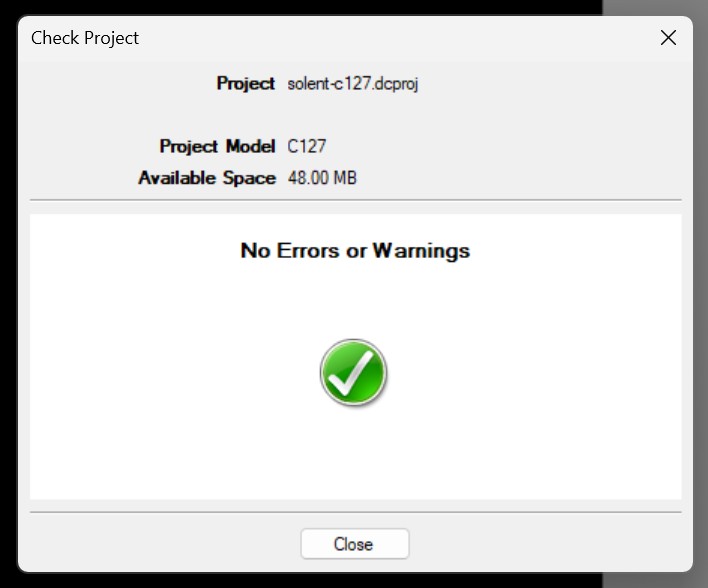
These two are screenshots from Display Creator itself, not renders.
With the boat DBC imported and the project built on its channels, Quick Check reports no errors or warnings for the C127. In the simulator, with values typed in by hand, these behave as designed: harbour with the speed-limit alarm, on the plane, the night page, man overboard with its timer counting, and the shallow-water alarm.
Gallery
Pages up close
Select any image to see it full size.
HELM · Marine 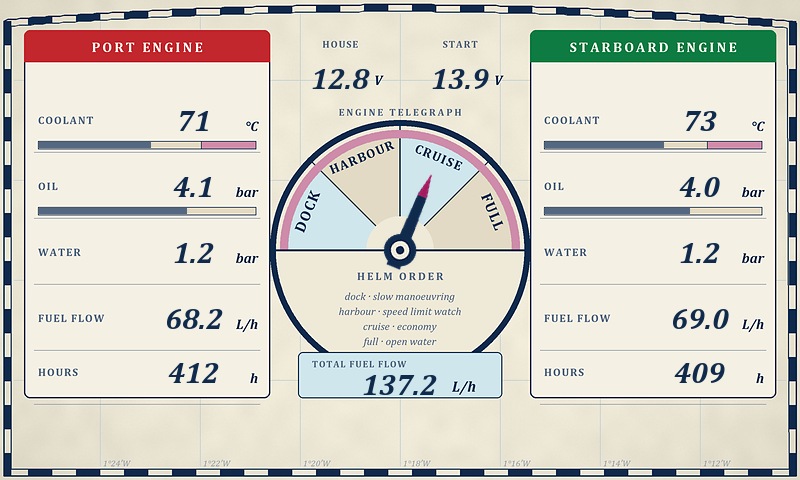
ENGINES · Marine 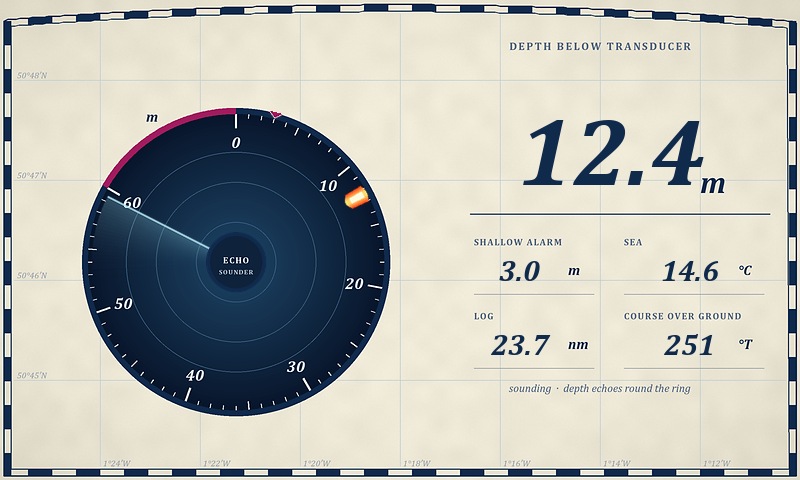
SOUNDER · Marine NIGHT · Marine 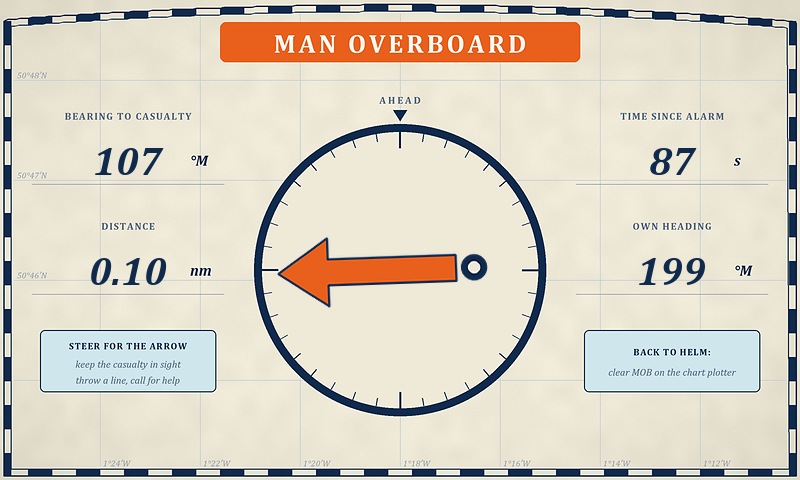
MAN OVERBOARD · Marine
Want one for your boat or car?
Tell me what you've got and attach your Display Creator project if you have one.